Mostrar mensagens com a etiqueta ciência. Mostrar todas as mensagens
Mostrar mensagens com a etiqueta ciência. Mostrar todas as mensagens
7 de março de 2016


2 de março de 2016
Este assunto já me cansou há muito, mas continua "vivinho da silva"
Esta história é sintomática de mais de uma coisa - leiam, e cheguem às vossas conclusões. Começa assim:
"Climate models, and the predictions they make, are based on physics. We know how much more energy is trapped on Earth when we increase the greenhouse effect, and we have a good idea how much this trapped heat will warm the planet. We’ve understood these physical scientific concepts for over 150 years.
When climate contrarians make their own predictions, they tend to throw physics out the window. For example, as documented in my book and a paper I recently published with Rasmus Benestad and colleagues, contrarians have made climate predictions based on things like the orbital cycles of Jupiter and Saturn, ocean cycles and sunspots, and “natural fluctuations,” but they often completely disregard the basic, long-understood physics of the increasing greenhouse effect.
And so we have the latest such unphysical climate prediction, made in a report by Loughborough University statistics professor Terence Mills, on behalf of the anti-climate policy advocacy group, the Global Warming Policy Foundation (GWPF). The report essentially fits a statistical model to past global and local surface temperature
changes, and then uses that statistical model to forecast future
temperature changes. It’s an approach that’s been used to predict
financial market changes, for example. ...."
GWPF throws out centuries of physics, climate scientists laugh, conservative media fawns
25 de fevereiro de 2016
The number that fascinates physicists above all others:
"It is the fine-structure constant denoted by the Greek letter alpha. Paul Davies explains."
"It is the fine-structure constant denoted by the Greek letter alpha. Paul Davies explains."
18 de fevereiro de 2016
Olhar por cima do muro para terreno que nunca iremos trilhar, mas, a ver se se percebe alguma coisa ...
Muito interessante. Uma primeira parte muito pedagógica, e acessível; depois, não tanto. Uma reta final que se vai acompanhando. As perguntas e respostas dão alguma informação sobre buracos negros que não sabia. Enfim, para quem gosta destas coisas, e numa de aprofundar o nosso nível de ignorância, vale a pena ver.
17 de novembro de 2011
E quem não percebe isso, não percebe nada e não tem muitas hipótese de vir a perceber alguma coisa de significativo!
“We have not succeeded in answering all our problems. The answers we have found only serve to raise a whole set of new questions. In some ways we feel we are as confused as ever, but we believe we are confused on a higher level and about more important things.”
"I read this quote on a wall on Mark Cane’s office at LDEO (Columbia) many years ago and always wondered where it came from. He found it as an epigram in a book on ‘Stochastic Differential Equations‘ by Bernt Øksendal where it is sourced to a sign outside the mathematics reading room at Tromsø University. The actual source appears to be a 1951 report on an education workshop by Earl C. Kelley, a professor at Wayne University (sleuthing by QI)."
1 de novembro de 2011
Astronomy Picture of the Day, 2011 November 1 - O martelo e a pena
Não sabia que a experiência de Galileu tinha sido reproduzida na Lua.
Astronomy Picture of the Day
Explanation: If you drop a hammer and a feather together, which reaches the ground first? On the Earth, it's the hammer, but is the reason only because of air resistance? Scientists even before Galileo have pondered and tested this simple experiment and felt that without air resistance, all objects would fall the same way. Galileo tested this principle himself and noted that two heavy balls of different masses reached the ground simultaneously, although many historians are skeptical that he did this experiment from Italy's Leaning Tower of Pisa as folklore suggests. A good place free of air resistance to test this equivalence principle is Earth's Moon, and so in 1971, Apollo 15 astronaut David Scott dropped both a hammer and a feather together toward the surface of the Moon. Sure enough, just as scientists including Galileo and Einstein would have predicted, they reached the lunar surface at the same time. The demonstrated equivalence principle states that the acceleration an object feels due to gravity does not depend on its mass, density, composition, color, shape, or anything else. The equivalence principle is so important to modern physicsthat its depth and reach are still being debated and tested even today.
29 de outubro de 2011
6 de outubro de 2011
Na ciência como na política é necessário ter toda a informação para actuar e decidir bem - Video on TED.com
Ben Goldacre: Battling bad science | Video on TED.com
Every day there are news reports of new health advice, but how can you know if they're right? Doctor and epidemiologist Ben Goldacre shows us, at high speed, the ways evidence can be distorted, from the blindingly obvious nutrition claims to the very subtle tricks of the pharmaceutical industry.
24 de setembro de 2011
O limite da velocidade da luz é aborrecido: torna as viagens interestelares, se não impossíveis à escala da espécie humana, pouco práticas, limitadas e impraticáveis no âmbito da vida de alguém...
... Claro que a FC resolveu o problema especulando a existência de atalhos através de outras dimensões, do dito hiper-espaço. Ora senão que surge a notícia abaixo: talvez Einstein não tenha acertado nesta e haja, efectivamente, um qualquer atalho. Enfim, esperemos pela confirmação, que aliás está a ser pedida por todos, nomeadamente pelos cientistas implicados na descoberta do resultado, como exige a boa prática científica:
Breaking the Speed of Light: It’s been a tenet of the standard model of physics for over a century. The speed of light is a unwavering and unbreakable barrier, at least by any form of matter and energy we know of. Nothing in our Universe can travel faster than 299,792 km/s (186,282 mph), not even – as the term implies – light itself. It’s the universal constant, the “c” in Einstein’s E = mc2, a cosmic speed limit that can’t be broken.That is, until now.An international team of scientists at the Gran Sasso research facility outside of Rome announced today that they have clocked neutrinos traveling faster than the speed of light. The neutrinos, subatomic particles with very little mass, were contained within beams emitted from CERN 730 km (500 miles) away in Switzerland. Over a period of three years, 15,000 neutrino beams were fired from CERN at special detectors located deep underground at Gran Sasso. Where light would have made the trip in 2.4 thousandths of a second, the neutrinos made it in 60 nanoseconds – that’s 60 billionths of a second – a tiny difference to us but a huge difference to particle physicists!The implications of such a discovery are staggering, as it would effectively undermine Einstein’s theory of relativity and force a rewrite of the Standard Model of physics.
8 de setembro de 2011
Gasolina com e sem chumbo; tabaco; CO2 ...
As duas primeiras notas historiam como apareceu a gasolina com chumbo, como lidaram com ela e as suas consequências. O interesse óbvio da história é que rima [citando Mark Twain, de memória: a história não se repete, mas rima muitas vezes] com outras histórias acontecidas, também nos EUA, como a do tabaco, a dos medicamentos, a dos alimentos, e claro, com a história em curso relativa ao CO2. Os processos são sempre os mesmos: desacreditar a boa ciência com a ciência marcenária, imputando a existência de controvérsia onde ela é tão somente fabricada; comprar o poder político e por aí adiante.
A última história é sobre a indústria tabaqueira chinesa e lembra-nos que as coisas acontecem, também, em outros lados.
At the Door of the Loony Gas Building | Speakeasy Science
Of Dead Bodies and Dirty Streets | Speakeasy Science
Scenes from the tobacco harvest: Why China can't quit smoking | Danwei
27 de julho de 2011
Na escala de Dawkins situo-me ao nível 6
"Jonathan Pararajasingham has pulled together a montage of 50 renowned academics, mostly all scientists, talking about their thoughts on the existence of God. The list includes includes 16 Nobel prize winners, and a bundle of recognizable names, including Richard Feynman, Steven Pinker, Oliver Sacks, Bertrand Russell, Stephen Hawking, and Leonard Susskind."
24 de julho de 2011
Multiverso
Astronomy Without A Telescope – Bubblology
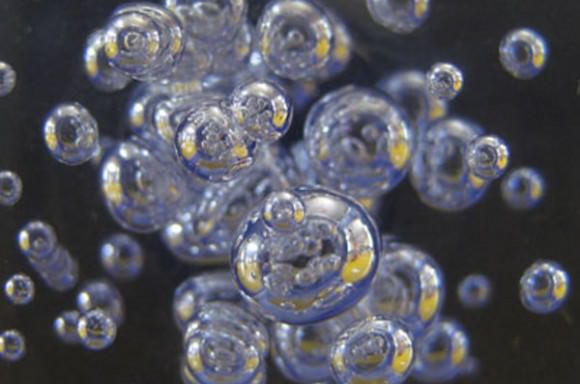 |
| Multiverse hypotheses suggest that bubble universes should eventually interact and we should be able to determine the existence of the multiverse from such interactions. Credit: cosmology.com |
O livro a ler como forma de aprofundar e ampliar o nosso nível de ignorância neste assunto é Many Worlds in One, de Alex Vilenkin, Ed. Hill and Wang, New York, 2006: està à venda na Feira do Livro, em Ponta Delgada.
Isto também é uma anomalia
Thomas Huxley , the British biologist who so vociferously, and effectively, defended Darwin's theory of natural selection in the 19th century, had a basic view of science. "It is simply common sense at its best – rigidly accurate in observation and merciless to fallacy in logic."It is as neat a description as you can get and well worth remembering when considering how science is treated by the UK media and by the BBC in particular. Last week, a study, written by geneticist Steve Jones, warned that far too often the corporation had failed to appreciate the nature of science and to make a distinction "between well-established fact and opinion". In doing so, the corporation had given free publicity to marginal belief, he said.Jones was referring to climate change deniers, anti-MMR activists, GM crop opponents and other fringe groups who have benefited from wide coverage despite the paucity of evidence that supports their beliefs. By contrast, scientists, as purveyors of common sense, have found themselves sidelined because producers wanted to create controversy and so skewed discussions to hide researchers' near unanimity of views in these fields. In this way, the British public has been misled into thinking there is a basic division among scientists over global warming or MMR.
Continuar a ler em: Science and truth have been cast aside by our desire for controversy - Robin McKie - Observer - RichardDawkins.net
19 de abril de 2011
Algo sobre as origens

Tracing the spread of languages has been difficult. Most linguists use changes in words or grammatical structures to try to track language evolution. The English word "brother," for example, translates as bhrater in Sanskrit, brathir in Old Irish, frater in Latin, and phrater in Greek. These differences can be used to reconstruct the ancient words that gave rise to these modern ones. But unlike genes, these cultural units cannot be traced back far enough to distinguish patterns of language change much earlier than about 6500 years ago.So Quentin Atkinson, a psychologist at the University of Auckland in New Zealand who has long worked on language evolution, decided to look at language units whose pedigrees might be traceable further back: phonemes, the smallest units of sound that allow us to distinguish one word from another. For example, the English words "rip" and "lip" differ by a single phoneme, one corresponding to the letter "r" and the other to the letter "l."Atkinson looked at the phonemes from 504 languages across the world, using as his database the authoritative online World Atlas of Language Structures, which includes phonemes based on differences in the sounds of vowels, consonants, and spoken tones. He then constructed a series of models, demonstrating first that smaller populations have lower phoneme diversity. And, as also predicted if language arose in Africa, phoneme diversity was greatest in Africa and smallest in South America and Oceania (the islands of the Pacific Ocean), the points farthest from Africa, Atkinson reports online today in Science. The pattern matches that for human genetic diversity: As a general rule, the farther one gets from Africa—widely accepted as the ancestral home of our species—the smaller the differences between individuals within a particular population.
1 de fevereiro de 2011
O poder das potências de 10
"Powers of Ten
Credit & Copyright: Charles & Ray Eames (Eames Office)
Explanation: How different does the universe look on small, medium, and large scales? The most famous short science film of its generation gives breathtaking comparisons. That film, Powers of Ten, originally created in the 1960s, has now been officially posted to YouTube and embedded above. Please click the above arrow to see the nine minute movie for yourself. From a picnic blanket near Chicago out past the Virgo Cluster of Galaxies, every ten seconds the film zooms out to show a square a factor of ten times larger on each side. The video then reverses, zooming back in a factor of ten every two seconds and ends up inside a single proton. The Powers of Ten sequence is actually based on the book Cosmic View by Kees Boeke in 1957, as is a similar but mostly animated film Cosmic Zoom that was also created in the late 1960s. The changing perspectives are so enthralling and educational that sections have been recreated using more modern computerized techniques, including the first few minutes of the movie Contact, and in a short digital video called The Known Universe created last year for the American Museum of Natural History. Ray and husband Charles Eames, the film's creators, were known as quite visionary spirits and even invented their own popular chair.
- Sent using Google Toolbar"
25 de fevereiro de 2010
Diversas sobre diversas ciências
Evolução:
- How a hobbit is rewriting the history of the human race | Science | The Observer: "The discovery of the bones of tiny primitive people on an Indonesian island six years ago stunned scientists. Now, further research suggests that the little apemen, not Homo erectus, were the first to leave Africa and colonise other parts of the world, reports Robin McKie"
- Intelligent people have 'unnatural' preferences and values that are novel in human evolution| Physorg.com: "More intelligent people are significantly more likely to exhibit social values and religious and political preferences that are novel to the human species in evolutionary history. Specifically, liberalism and atheism, and for men (but not women), preference for sexual exclusivity correlate with higher intelligence, a new study finds."
Religião:
- A comforting myth | Ophelia Benson | Comment is free | guardian.co.uk: "Suffering is just a fact, a consequence of being organisms with nerves and brains. It doesn't do us any good" e "The idea that hardship improves us looks like a rationalisation of an old superstitious fear that too much prosperity will trigger the opposite. The gods are jealous, and if we don't have any suffering, they'll see that we get some – and they always overdo it, the bastards, so it's much better if we do it to ourselves first so that they don't come along and wallop us. It's a good bargain if it works: I give up chocolate for a month and the gods don't drop an asteroid on my head."
- 'New Study Links Religion to Immoral Behavior' by MSNBC - ogjimkenobi - YouTube - RichardDawkins.net: Hum, poderá ser o caso, mais uma vez, de correlação não implicar, de modo necessário, causalidade?
Psicologia:
Biologia:
10 de fevereiro de 2010
18 de janeiro de 2010
Algumas sobre ciência
E não é que aconteceu mesmo uma maça ter despertado Newton para a noção da gravidade.?Quanto aos Boskops, fiquei surpreendido com o artigo referenciado abaixo - nunca tinha ouvido falar desses "muito especiais" nossos antepassados, e em particular, das suas capacidades - mas, a Wikipédia serviu para qualificar a notícia (ver aqui):
- Mediterranean Sea filled in less than two years: study | Physorg.com: "The Mediterranean Sea was mostly filled in less than two years in a dramatic flood around 5.33 million years ago in which water poured in from the Atlantic, according to a study published Wednesday"
- Can Science Explain Religion? - The New York Review of Books
- What Happened to the HominidsWho Were Smarter Than Us? | Human Evolution | DISCOVER Magazine: "The Boskops had big eyes, child-like faces, and an average intelligence of around 150, making them geniuses among Homo sapiens."
- Isaac Newton's falling apple tale drops into the web | Science | The Guardian: "'After dinner, the weather being warm, we went into the garden and drank tea, under the shade of some apple trees,' wrote Stukeley, in the papers published in 1752 and previously available only to academics. 'He told me, he was just in the same situation, as when formerly, the notion of gravitation came into his mind. It was occasion'd by the fall of an apple, as he sat in contemplative mood. Why should that apple always descend perpendicularly to the ground, thought he to himself.'"
11 de janeiro de 2010
A direita norte-americana está passada dos carretos!
American Enterprise Institute "Economist" of Mass Destruction Kevin Hassett Strikes Again (Republican War on Science Department) - Grasping Reality with Opposable Thumbs:
"American Enterprise Institute 'Economist' of Mass Destruction Kevin Hassett Strikes Again (Republican War on Science Department) Carrying the Republican War on Science to previously unplumbed depths of human stupidity, Kevin 'Dow 36000' Hassett of the American Enterprise Institute calls for the USAF to bomb both France and Switzerland, hoping to get the scientists in their tunnels before they can destroy the earth:"
"American Enterprise Institute 'Economist' of Mass Destruction Kevin Hassett Strikes Again (Republican War on Science Department) Carrying the Republican War on Science to previously unplumbed depths of human stupidity, Kevin 'Dow 36000' Hassett of the American Enterprise Institute calls for the USAF to bomb both France and Switzerland, hoping to get the scientists in their tunnels before they can destroy the earth:"
21 de dezembro de 2009
Ora, aqui está um sugestão de oferta de um livro a um seu amigo, honesto, capaz de ler em inglês, que "acredite" ser esta "moda" da ecologia e das alterações climáticas mais uma tontice esquerdista como o Professor Pacheco Pereira, lucidamente, aponta... Ou, você já sabia disto? ... Ou, você considera tudo isto uma peça de desinformação da cabala para criar um estado mundial como um cronista do Diário Económico afirmou há algumas semanas atrás? ... Ou, você ignora que o tribunal já iniciou o seu julgamento, e que "o desconhecimento da lei (da verdade) a ninguém aproveita (não pode ser invocado)".
Amazon.com: Doubt is Their Product: How Industry's Assault on Science Threatens Your Health (9780195300673): David Michaels: Books: "Editorial Reviews
Review
'In Doubt Is Their Product, David Michaels gives a lively and convincing history of how clever public relations has blocked one public health protection after another. The techniques first used to reassure us about tobacco were adapted to reassure us about asbestos, lead, vinyl chloride-and risks to nuclear facilities workers, where Dr. Michaels' experience as the relevant Assistant Secretary of Energy gave him an inside view. And if you're worried about climate change, keep worrying, because the same program is underway there.'--Donald Kennedy, Editor-in-Chief, Science
'We live in an age of unprecedented disinformation, misinformation, and outright lying by those in power. This important book shows who profits by misleading the public-and who ultimately pays with their health.'--Eric Schlosser, author of Fast Food Nation
'This well-researched book by someone who truly knows the system is a must read for anyone who wants to understand the cozy relationship between industry and regulatory agencies on matters that affect the health and safety of our families and neighbors. The cited examples illustrate how, with the help of irresponsible members of Congress and other public officials, corporate greed can trump any sense of ethics, morality, and human compassion.'--Neal Lane, former Science Advisor to President Bill Clinton and former Director of the National Science Foundation
'This brave, shocking book exposes the abuse of science by government and industry in ways that endanger the workplace, the home, the water supply, the air quality-in fact, our planet as a whole. David Michaels speaks authoritatively from his firsthand experience as a champion of occupational safety and health. He tells a terrific story.'--Dava Sobel, author of Longitude and Galileo's Daughter
'In Doubt Is Their Product, David Michaels calls out the corporations you'll recognize them that bankroll lobbyists and unethical scientists to attack factual evidence that their products, such as asbestos, lead, and tobacco, are deadly.'--Vanity Fair, Green Issue, May 2008
'David Michaels has written a powerful, thorough indictment of the way big business has ignored, suppressed or distorted vital scientific evidence to the detriment of the public's health.'--Nature
From Newsweek, 5/12/08
That science can be bought is hardly news to anyone who knows about tobacco 'scientists.' But how pervasive, effective and stealthy this science-for-hire is-as masterfully documented by David Michaels of George Washington University in his new book, 'Doubt Is Their Product: How Industry's Assault on Science Threatens Your Health'-will shock anyone who still believes that 'science' and 'integrity' are soulmates. In studies of how toxic chemicals affect human health, Michaels told me, 'It's quite easy to take a positive result [showing harmful effects] and turn it falsely negative. This epidemiological alchemy is used widely.' -Sharon Begley
From Nature, 6/12/08
David Michaels has written a powerful, thorough indictment of the way big business has ignored, suppressed or distorted vital scientific evidence to the detriment of the public's health. Doubt Is Their Product catalogues numerous corporate misdemeanours, especially in the United States, from the criminal neglect of the dangerous nature of asbestos and the lies told by the tobacco industry, to the suppression of adverse findings of deaths caused by the anti-inflammatory drug Vioxx and the increased risk of suicide among teenagers taking selective serotonin re-uptake inhibitors for depression. The book concludes with a list of prescriptions for securing better regulation and greater protection for the public, mainly through increased public disclosure of vested interests. -Dick Taverne
'The book is a shocking portrayal of the tactics used by corporate America to delay public health and environmental regulation of their products for the sake of profit...It is a must read for anyone interested in public health and environmental protection.'--Chemical & Engineering News
'
...Doubt Is Their Product reminds one of deeper risks that threaten scientific fields and democratic deliberation. ...The scientific community and the public need to be on guard against such abuses; Michaels's history of these events sounds an alert that must not be ignored.'--Durrants
One of Library Journal's top 10 sci-tech books of 2008!
Received an Honorable Mention in the Society for Environmental Journalism's 2009 Awards for Reporting on the Environment for the category Rachel Carson Environment Book Award.
'Doubt is our product,' a cigarette executive once observed, 'since it is the best means of competing with the 'body of fact' that exists in the minds of the general public. It is also the means of establishing a controversy.'
In this eye-opening expose, David Michaels reveals how the tobacco industry's duplicitous tactics spawned a multimillion dollar industry that is dismantling public health safeguards. Product defense consultants, he argues, have increasingly skewed the scientific literature, manufactured and magnified scientific uncertainty, and influenced policy decisions to the advantage of polluters and the manufacturers of dangerous products. To keep the public confused about the hazards posed by global warming, second-hand smoke, asbestos, lead, plastics, and many other toxic materials, industry executives have hired unscrupulous scientists and lobbyists to dispute scientific evidence about health risks. In doing so, they have not only delayed action on specific hazards, but they have constructed barriers to make it harder for lawmakers, government agencies, and courts to respond to future threats. The Orwellian strategy of dismissing research conducted by the scientific community as 'junk science' and elevating science conducted by product defense specialists to 'sound science' status also creates confusion about the very nature of scientific inquiry and undermines the public's confidence in science's ability to address public health and environmental concerns Such reckless practices have long existed, but Michaels argues that the Bush administration deepened the dysfunction by virtually handing over regulatory agencies to the very corporate powers whose products and behavior they are charged with overseeing.
In Doubt Is Their Product Michaels proves, beyond a doubt, that our regulatory system has been broken. He offers concrete, workable suggestions for how it can be restored by taking the politics out of science and ensuring that concern for public safety, rather than private profits, guides our regulatory policy."
Consequência:
On environment, Obama and scientists take hit in poll - washingtonpost.com: "There's also rising public doubt and growing political polarization about what scientists have to say on the environment, and a widespread perception that there is a lot of disagreement among scientists about whether global warming is happening."
No entretanto:
Further reading of stolen emails reveals scientists searching for the truth « Climate Progress: "I have spent the last week reading far more emails belonging to other people than I ever would have liked. While a number of the emails have been flogged around the blogosphere and captured much of the attention, I found that a lot of emails worth seeing have gotten no attention at all. Including some that show that the denialista’s claims of a grand conspiracy is more of a grand hallucination. Because the stolen emails contain plenty of discussions that reveal just how hard the scientists work to make sure they are getting the information right. That’s Pete Altman, NRDC’s Climate Campaign Director, writing last week on the Switchboard blog on the stolen emails you haven’t heard about."
Consequência:
On environment, Obama and scientists take hit in poll - washingtonpost.com: "There's also rising public doubt and growing political polarization about what scientists have to say on the environment, and a widespread perception that there is a lot of disagreement among scientists about whether global warming is happening."
No entretanto:
Further reading of stolen emails reveals scientists searching for the truth « Climate Progress: "I have spent the last week reading far more emails belonging to other people than I ever would have liked. While a number of the emails have been flogged around the blogosphere and captured much of the attention, I found that a lot of emails worth seeing have gotten no attention at all. Including some that show that the denialista’s claims of a grand conspiracy is more of a grand hallucination. Because the stolen emails contain plenty of discussions that reveal just how hard the scientists work to make sure they are getting the information right. That’s Pete Altman, NRDC’s Climate Campaign Director, writing last week on the Switchboard blog on the stolen emails you haven’t heard about."
Subscrever:
Mensagens (Atom)