22 de fevereiro de 2011

América

Paul Krugman comenta os protestos sindicais no Wisconsin:
 

Last week, in the face of protest demonstrations against Wisconsin’s new union-busting governor, Scott Walker — demonstrations that continued through the weekend, with huge crowds on Saturday — Representative Paul Ryan made an unintentionally apt comparison: “It’s like Cairo has moved to Madison.”

It wasn’t the smartest thing for Mr. Ryan to say, since he probably didn’t mean to compare Mr. Walker, a fellow Republican, to Hosni Mubarak. Or maybe he did — after all, quite a few prominent conservatives, including Glenn Beck, Rush Limbaugh and Rick Santorum, denounced the uprising in Egypt and insist that President Obama should have helped the Mubarak regime suppress it.
In any case, however, Mr. Ryan was more right than he knew. For what’s happening in Wisconsin isn’t about the state budget, despite Mr. Walker’s pretense that he’s just trying to be fiscally responsible. It is, instead, about power. What Mr. Walker and his backers are trying to do is to make Wisconsin — and eventually, America — less of a functioning democracy and more of a third-world-style oligarchy. And that’s why anyone who believes that we need some counterweight to the political power of big money should be on the demonstrators’ side.

"- Sent using Google Toolbar"

E  um dos colaboradores do blogue Free exchange - The Economist comenta o comentário - a subida dos impostos é modalidade considerada aberrativa no actual contexto político-ideológico actual dos EUA:


Indeed a severe recession borne of the financial crisis is what brought Wisconsin to fiscal meltdown. But this has merely accelerated a recognition of Wisconsin's bigger structural issues. Blaming Wall Street is a convenient way to avoid the elephant in the room—that people must rethink the social contract between state workers and taxpayers. As health care gets more expensive and people live longer, the old model simply isn't sustainable. This means that either benefits must be cut (which, given legal hurdles, is unlikely) or state residents must pay more taxes. 

The worst possible outcome is the cautionary tale provided by Prichard, Alabama. Hard choices where not made in time. The pension fund ran out of money and the local government did not have the tax base to pay benefits. The retirees stopped receiving their benefits and now face severe poverty and uncertainty in their old age. Perhaps if state workers took on a little risk now, such as less job security and private pension accounts, they’ll manage to avoid a similar fate.

"- Sent using Google Toolbar"

20 de fevereiro de 2011

Questão a ter em linha de conta...


"Those who want to cut Social Security benefits because people are living longer, e.g. through raising the retirement age, assume longevity is independent of the Social Security system. That assumption may be false:

Study links social security improvements to longer life span, EurekAlert: ...According to a new study published in the Journal of Public Health Policy, Americans over the age of 65 experienced steep declines in the rate of mortality in the periods that followed the founding of and subsequent improvements to Social Security. The authors urge that as Congress and the President discuss changes to Social Security they consider the benefit of reduced mortality and improved health among older Americans. ...

- Sent using Google Toolbar"

Pergunta


"Do we believe the whole elite of science is in a conspiracy? At some point in the development of a scientific truth, contrarians risk becoming flat earthers.

- Sent using Google Toolbar"

19 de fevereiro de 2011

Constatações


.... A corrida para ver quem censura primeiro dá um retrato fiel do país político: os partidos envolvidos num jogo tático confrangedor, em que, de um lado, temos um Governo com um programa que não é o seu e, de outro, uma oposição que escolheu o caminho da fulanização anti-Sócrates como forma de esconder as suas vacuidades programáticas.

Ora, em lugar desta tensão tática primária, com o espectro de ingovernabilidade sempre a pairar, o que o conjunto dos partidos nos poderia oferecer era capacidade negocial de facto, institucionalizando uma prática de diálogo que teimamos em não ter. Os ajustamentos que necessariamente teremos de fazer só são exequíveis com um pacto social alargado, que dê sustentabilidade e previsibilidade às opções - à imagem do que aconteceu em Espanha. O que temos é um jogo de póquer, desfasado da realidade, no qual nem Governo, nem oposições se mostram disponíveis para abandonar a rigidez das suas posições de partida.

No fundo, torna-se claro que, se as dificuldades não forem suficientes, temos sempre uma garantia: o sistema político cá estará para somar problemas. Talvez assim se perceba a especificidade do mal português e o crescente desajustamento entre partidos e país.

"- Sent using Google Toolbar"

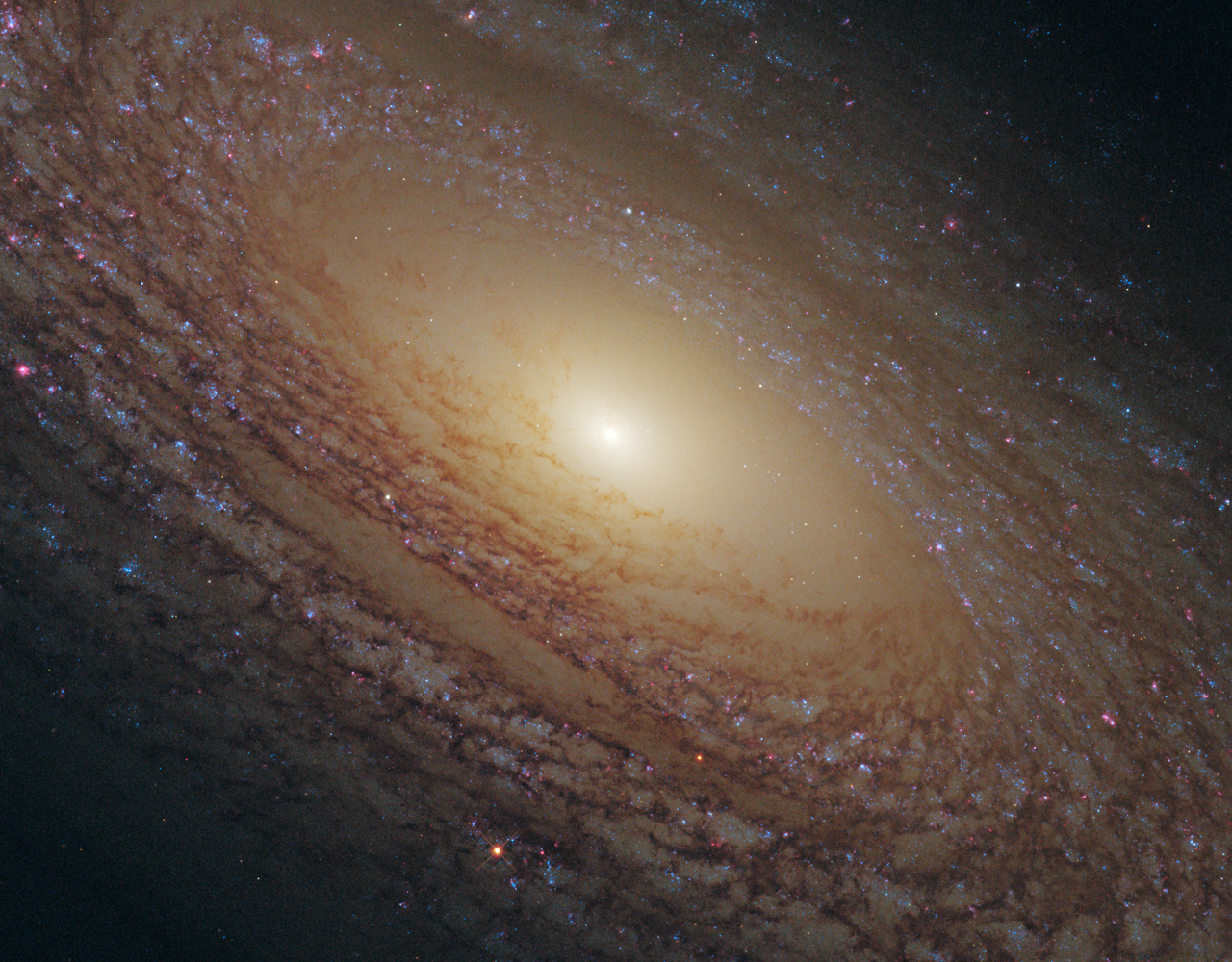
Astronomy Picture of the Day, 2011 February 19 - spiral galaxy NGC 2841

Astronomy Picture of the Day:

2011 February 19
See Explanation.  Clicking on the picture will download the highest resolution version available.
Spiral Galaxy NGC 2841 Close Up

Credit: NASA, ESA, and the Hubble Heritage (STScI / AURA) - ESA / Hubble Collaboration

 Explanation: A mere 46 million light-years distant, spiral galaxy NGC 2841 can be found in the northern constellation of Ursa Major. This sharp view of the gorgeous island universe shows off a striking yellow nucleus and galactic disk. Dust lanes, small, pink star-forming regions, and young blue star clusters are embedded in the patchy, tightly wound spiral arms. In contrast, many other spirals exhibit grand, sweeping arms with large star-forming regions. NGC 2841 has a diameter of over 150,000 light-years, even larger than our own Milky Way, but this close-up Hubble image spans about 34,000 light-years along the the galaxy's inner region. X-ray images suggest that resulting winds and stellar explosions create plumes of hot gas extending into a halo around NGC 2841.

"- Sent using Google Toolbar"

18 de fevereiro de 2011

América

Os hábitos velhos tendem a renascer, apesar das declarações de intenções. Esta nota é uma reincidência da minha parte: as referências, qualquer delas é interessante, a compulsão para espalhar a nova é grande [noutra altura, e noutro contexto, eu teria sido profeta, no mínimo] como é a de limpar as notas-rascunho, e daí uma nota quilométrica - para quem não perceber: eu tinha prometido, a mim mesmo, não multiplicar as referências.

O denominador destas referências é o momento político norte-americano, e em particular o peso do Partido Republicano na sua conformação. Poderia encarar tudo isto que se passa com mais equanimidade se não vivesse no mesmo planeta que eles, e devem entender o que digo de modo literal. Citando Bill Maher livremente: o Partido Democrata passou-se para a direita, e o Partido Republicano transformou-se num manicómio, e este é que está a determinar, em grande parte, a dança. 

As três primeiras referências são todas de um economista, do seu blogue no The Economist. 

A primeira, basicamente, diz o que é o governo (no sentido lato) dos EUA, e sugere, timidamente, que já se foi longe demais, porque sem mobilidade social, nada feito.

A segunda dá conta de uma prática no mercado de trabalho de lá  quanto ao reemprego dos desempregados. Não creio que isso se verifique, para já, em Portugal, mas seria interessante saber com certeza.

A terceira é uma defesa de Paul Krugman no que respeita às suas posições quanto ao processo orçamental norte-americano em curso - muita gente lá (e alguns por cá) considera Krugman radical. Mas, como dizia a um amigo há algumas semanas atrás, se os políticos da direita portuguesa fossem replantados nos EUA, dizendo o que dizem cá [repararem na subtileza da condicionalidade colocada], seriam considerados perigosos esquerdistas.
 
A quarta referência seria cómica se não fosse horrivelmente séria.

Desastres


"... And we need collectively to take steps to realistically address these risks. We need to improve the organizations we create, both public and private, aimed at mitigating large risks. And we need to substantially improve upon the reach and effectiveness of the regulatory systems that govern these activities. But Perrow insists that improving organizations and leadership, and creating better regulations, can only take us so far. So we also need to reduce the scope of damage that will occur when disaster strikes. We need to design our social system for 'soft landings' when disasters occur.

- Sent using Google Toolbar"

Embora, o livro que é recenseado nesta nota tenha como referência os EUA - e o que se diz a esse respeito é muito interessante - o que se escolheu citar funciona como que um programa de reflexão e de actuação completo (ao nível de generalidade a que é colocado) para todo o lado, nestas matérias.
 

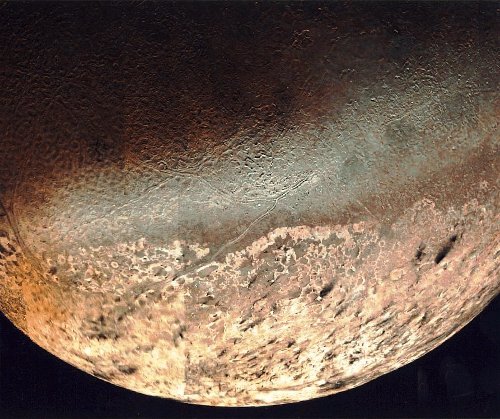
No Sistema Solar há água por todo o lado ....


Image: Triton as seen by Voyager 2. Credit: NASA.

"But in addition to all we’ve learned through our spacecraft, our view of the Solar System has gone from a small number of orbiting planets to huge numbers of objects at vast distances. Fifty years ago, a Kuiper Belt many times more massive than the main asteroid belt was only theory. And the early Solar System models I grew up with never included any representation of a vast cloud of comets all the way out to 50,000 AU.

We’ve also begun to learn that liquid water, once thought confined to the Earth, may be plentiful throughout the system

- Sent using Google Toolbar"

Vale mesmo a pena ler a nota donde retirei isto.

Notícias do futuro

NSIDC bombshell: Thawing permafrost feedback will turn Arctic from carbon sink to source in the 2020s, releasing 100 billion tons of carbon by 2100 - Study underestimates impacts with conservative assumptions


Figure:  Carbon emission (in billions of tons of carbon a year) from thawing permafrost.
The thaw and release of carbon currently frozen in permafrost will increase atmospheric CO2 concentrations and amplify surface warming to initiate a positive permafrost carbon feedback (PCF) on climate…. [Our] estimate may be low because it does not account for amplified surface warming due to the PCF itself….  We predict that the PCF will change the arctic from a carbon sink to a source after the mid-2020s and is strong enough to cancel 42–88% of the total global land sink. The thaw and decay of permafrost carbon is irreversible and accounting for the PCF will require larger reductions in fossil fuel emissions to reach a target atmospheric CO2 concentration.

That’s the stunning conclusion from “Amount and timing of permafrost carbon release in response to climate warming” (subs. req’d), a major new study in Tellus by NOAA and the National Snow and Ice Data Center (NSIDC).  As we’ll see, the figure above is almost certainly too conservative post-2080.

17 de fevereiro de 2011

Assobio - Vídeo TED


At TEDxRotterdam, world champion whistler Geert Chatrou performs the whimsical 'Eleonora' by A. Honhoff, and his own 'Fête de la Belle.

- Sent using Google Toolbar"

16 de fevereiro de 2011

Anomalias


"One paper, by Seung-Ki Min and others, shows that rising concentrations of greenhouse gases in the atmosphere have caused an intensification of heavy rainfall events over some two-thirds of the weather stations on land in the northern hemisphere. The climate models appear to have underestimated the contribution of global warming on extreme rainfall: it's worse than we thought it would be.

- Sent using Google Toolbar"

PS, 17.02.11: Sobre o mesmo assunto, um comentário mais abalisado: RealClimate: Going to extremes
 

Aritmética aplicada


Para o conjunto do ano, diz o INE, a taxa de desemprego foi, em média, de 10,8%, .... A população desempregada situou-se em 602 mil indivíduos ...Os números hoje divulgados pelo INE contrariam as estimativas do Governo, que na proposta de Orçamento do Estado para 2011 indica que a taxa de desemprego se situaria nos 10,6% em 2010 ....
"- Sent using Google Toolbar"

O Governo previu 10,6 % de taxa de desemprego para 2010; o valor verificado foi 10,8 % - o erro da previsão foi de 0,2 pontos percentuais, ou um erro de previsão de 1,9 %. 

Vejamos, para os cerca de 12000 novos desempregados a sua nova situação é efectivamente má, mas o problema grave a nível do país, em relação a isto, continua a ser a ordem de grandeza do desemprego que se mantém cerca dos 600 mil desempregados.

O alarido é duns, mas se o cenário tivesse sido este:

O Governo previra 10,6 % de taxa de desemprego para 2010; o valor verificado teria sido de 10,4 % - o erro da previsão seria de - 0,2 pontos percentuais, ou um erro de previsão de -1,9 %.

Para os cerca 11500 novos empregados a sua recém situação seria efectivamente boa, mas o problema grave, em relação a isso continuaria a ser a ordem de grandeza do desemprego que se manteria em cerca dos 600 mil desempregados. 

O alarido seria dos outros, mas a sua qualidade seria a mesma. 

Moral a retirar: se querem brincar às décimas, pelo menos, contextualizem-nas!

Anomalias


"The 3.5°F warming of Fram Strait water over the past century is 'not just the latest in a series of natural multidecadal oscillations.'

- Sent using Google Toolbar"

Deixei passar esta.

13 de fevereiro de 2011

A confirmar-se, seria magnífico ...


"If you grew up thinking there were nine planets and were shocked when Pluto was demoted five years ago, get ready for another surprise. There may be nine after all, and Jupiter may not be the largest.

The hunt is on for a gas giant up to four times the mass of Jupiter thought to be lurking in the outer Oort Cloud, the most remote region of the solar system. The orbit of Tyche (pronounced ty-kee), would be 15,000 times farther from the Sun than the Earth's, and 375 times farther than Pluto's, which is why it hasn't been seen so far.

- Sent using Google Toolbar"

12 de fevereiro de 2011

Cancro nos Açores

Ouvi, ontem, no Expresso da Meia-Noite, que o Expresso publicado hoje, mas que, aqui, nos Açores, só teremos acesso amanhã, referia a situação do cancro nos Açores. Não sei, portanto, o conteúdo da notícia.  Poderá estar ligada ao estudo do Professor Manuel Coelho e Silva sobre a evolução da expectativa de vida  dos portugueses baseada num sub-conjunto da população escolar dos Açores. 

Mas se referir só o cancro nos Açores, a notícia peca por ser redutora e mal informada. O problema é que nos Açores, relativamente ao Continente, e menos em relação à Madeira, a  taxa de mortalidade - medida pela taxa de mortalidade normalizada - não só quanto ao cancro, mas em relação às doenças mais graves, é significativamente maior. Isso é sabido desde 2005 na base de informação estatística dada pelo INE. Que o assunto leve  6 a 7 anos a aflorar na opinião pública, através da comunicação social continental,  sem que a nível político regional, do governo e oposição,  tenha merecido a devida atenção, discussão e projecção pública, é absolutamente estarrecedor - se as pessoas estão a morrer cá mais do que lá,  em termos  relativos, isso significa que há causas locais, necessariamente, ao nível de comportamento de cada um dos cidadãos, que importa estudar, denunciar, alertar e prevenir, mais, e com mais eficácia do que tem sido feito: o não o fazer releva da negligência criminosa. Obviamente, que o problema não radica no Sistema Regional de Saúde (SRS),  e dos seus profissionais, que nada devem em termos de qualidade e de proficiência aos seus congéneres continentais - o problema está noutro lado.

Não que todos tenham estado distraídos. O autor do blogue Canibais e Reis já me tinha alertado  para o assunto e tinha-me solicitado apoio na obtenção de informação que permitisse perceber e contextualizar a diferença entre os Açores e o Continente - (como seria de esperar, essa informação não abunda)- o meu filho antes, também me tinha referido que os números quanto ao cancro nos Açores eram alarmantes. Referi o assunto aqui. No entretanto, ainda há pouco do tempo, esse blogue abordou o assunto:


[Quanto aos Açores] "....há uns factos pouco conhecidos que talvez se possam explorar. Por exemplo, nas estatísticas de 2005, a mortalidade nos Açores/Madeira (cerca de 900 a 960 mortes/100.000hab/ano) era muitíssimo superior à média do Continente (665 mortes/100.000hab/ano). Repare que é uma diferença enormíssima, quase na casa dos 30%.....

E porquê os Açores têm dobro de mortalidade cardiovascular e muito mais pneumonia/infecções? ....

- Sent using Google Toolbar"

Visitem o blogue para ler a nota na totalidade. Voltarei ao assunto. Como devem ter reparado a questão é política; é de saúde pública; é, pois, do nível que se tem de sensibilidade social; é, deixem-me brincar com coisas sérias, economicista (vejam o défice do SRS); e é, também, de como uma região, que é autónoma, se conhece, se conhece a si própria, ou, enfim, não se conhece: mas, se não se conhece, como pode ser governada bem?

Histórias exemplares

À volta de 1987 fui admitido na Direcção Geral da Administração Pública. Foi-me dito, na altura, que apesar dos esforços do organismo, não se sabia com precisão quantos funcionários públicos tinha o País, e isso porque o inquérito anual sobre o assunto não era respondido por muitos dos outros organismos. É sabido que a evolução da variável: número de funcionários determina, via ordenados, parte significativa da despesa pública. É óbvio que a mais elementar gestão dessa despesa, por parte dos sucessivos governos, passaria e passa pelo acompanhamento da progressão dessa variável. É óbvio que os sucessivos governos não o consideraram óbvio, já que o assunto seria resolvido, facilmente, se os dirigentes dos organismos faltosos fossem demitidos, e demitidos por esse motivo - mas a ameaça de qualquer um dos sucessivos primeiro-ministros de o fazer teria produzido o resultado pretendido.

Penso que só recentemente se conseguiu, finalmente, saber com exactidão esse número. 

Quando conto a história, muitas vezes deparo-me só com olhos vidrados.

Questionam-se, por acaso, porque razão estamos como estamos? Esta é uma das pistas a explorar ...

Estatística


"To identify the things that work and stop doing the things that don’t, we must collect massive amounts of data, study them in the right way, and resist efforts to restrict their use.

- Sent using Google Toolbar"

É óbvio, ou deveria sê-lo.

11 de fevereiro de 2011

Explicações

Krugman é um dos economistas que leva a sério as alterações climáticas e as suas consequências. Abaixo três exemplos (devem lê-los na totalidade):


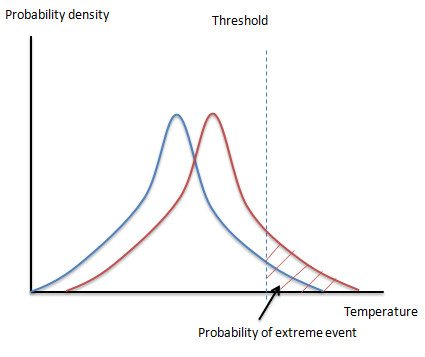
What happens is that the right tail gets fatter: the probability, and hence the frequency, of extreme events goes up.

Two immediate implications. First, there will still be cold stretches: global warming shifts the distribution, it doesn’t eliminate the left side of the distribution. So there will still be cold spells; that proves nothing. Second, no individual weather event can properly be said to have been “caused” by global warming. Heat waves happened 30 years ago; there’s no way to prove that any individual heat wave now might not have happened even if we hadn’t emitted all that CO2.

But the pattern should have changed: we should be getting lots of record highs, and not as many record lows — which is exactly what we do see. And we should be seeing 100-year heat waves and similar events much more often than history would have suggested likely; again, that’s what we actually do see.

"- Sent using Google Toolbar"
Pânico


Climate scientists are becoming increasingly panicked as new evidence rolls in and just about every bit is worse than the last. The impacts of climate change are coming faster and harder than most models predicted, and there's a real -- if maddeningly difficult to quantify -- risk of civilization-threatening scenarios that sound like bad sci-fi movies.

"- Sent using Google Toolbar"
A razão suficiente para escolher colocar a citação deve ser óbvia. Este estilo e conteúdo estão a tornar-se comuns, mesmo da parte dos mais analíticos.

No entretanto, o artigo referenciado trata de como a questão das alterações climáticas é tratada de modo diferente, em termos da avaliação das suas consequências, e das propostas de como actuar,  pelos climatologistas e pelos economistas. É interessante, e para quem estiver para aí virado, pode ver, aqui ao lado nos partilhados do Google Reader , uma reacção de um economista a este artigo, no blogue do The Economist, onde pretende explicar as razões da cautela da profissão na matéria: "Are economists erring on climate change?". Esta  é significativa dos tempos, quer por ser feita onde é, e pelo que admite, mas, adoptando um conceito do léxico trostkista, é, a meu ver, demasiado centrista - Krugman, Brad DeLong, e outros, já ultrapassaram essa fase.

Sustentabilidade


"The U.S. fears that Saudi Arabia, the world's largest crude oil exporter, may not have enough reserves to prevent oil prices escalating, confidential cables from its embassy in Riyadh show. The cables, released by WikiLeaks, urge Washington to take seriously a warning from a senior Saudi government oil executive that the kingdom's crude oil reserves may have been overstated by as much as 300bn barrels-- nearly 40%.

....the world doesn't need to experience declines in potential oil production to see a rise in oil prices. All it needs is for oil producers to see that such limits loom and begin betting on the near-certainty of rising prices. Of course, different countries will face different liquidity constraints; some leaders may find themselves producing full out in order to sustain their socialist paradise, particularly when prices temporarily dip thanks to recession. But at those times, other countries with fiscal room to spare should cut back their production further—to buy more, essentially, when prices are low in order to sell more when prices are high.

- Sent using Google Toolbar"

Trabalho e Educação

São três peças: uma sobre o mercado do trabalho; as outras duas sobre a educação,mas estão todas ligadas.

A primeira é a entrevista feita pelo Público ao economista Mário Centeno sobre a situação do mercado de trabalho em Portugal - fui alertado para a entrevista pela The Portuguese Economy. Importa ler, mas dever-se-ia ler com a seguinte atitude: não concordando com as soluções - serão apelidadas a priori, por muitos, como neo-liberais - ter a honestidade intelectual de não ignorar os problemas apontados. Ou se se prova que são falsos problemas, ou se se tem soluções alternativas, ou se se  permanece na dúvida incómoda. Permanecer na dúvida incómoda é uma atitude de coragem intelectual. Mas, repito, nunca varrer as questões para baixo do tapete, ou, dito doutra maneira, não sobrepor "a análise concreta da situação concreta" - sim, eu sei, mas digo-o, com ironia, mas de modo sério - aos apriorismos morais e ideológicos de cada um.

A segunda dá conta de estudos nos EUA sobre as implicações sociológicas e económicas das evolução regressiva mais recente da frequência universitária naquele país. O que se refere cruza com a discussão que existe cá, sobre a importância de frequentar a Universidade, questão que, redutoramente, é funilizada , quase sempre, só para o problema, importante, claro, mas não único, da empregabilidade.

A terceira é também sobre aquele país, e aponta a importância da inovação no sistema educativo, e os requisitos que devem ser cumpridos para aquela inovação ser potenciada, acrescendo a eficácia do sistema. Como era de esperar vem a validar coisas que se dizem em Portugal, a contrario dos sindicatos dos professores.


Temos leis laborais feitas para proteger o emprego e a maioria das pessoas não se sente protegida. Temos metade da população activa com excesso de direitos e a outra metade sem nenhum. Temos subsídios de desemprego generosos mas apenas para uma elite. Chegámos aqui porque entre os direitos adquiridos e o caos ninguém propõe nada. Mário Centeno diz que não é falta de compreensão dos problemas, é apenas medo das reacções (Tereza de Sousa)

O debate sobre a reforma do mercado de trabalho é um daqueles casos em que parece ser impossível uma reflexão séria, de tal modo pesam as ideias feitas. A intuição que temos é que os resultados não correspondem aos objectivos pretendidos pela lei, mas que ninguém se importa com isso. Por que é que isto acontece?

As leis laborais, tal como existem em Portugal, reflectem aquilo a que nós, os economistas, chamamos economia política do debate e das decisões - é o votante mediano que, em última análise, decide para que lado é que alteramos a nossa legislação. Fiz parte da última Comissão do Livro Branco das Relações Laborais [lançada em 2006] que preparou a alteração do Código Laboral. Curiosamente, estava rodeado de juristas, não havia mais nenhum economista...

Isso também explica muita coisa...

- Sent using Google Toolbar"

10 de fevereiro de 2011

Um blogue egípcio

Vale a pena visitar pelas fotografias e vídeos.

Exportações

As notícias quanto às exportações são boas, mas deviam ser ponderadas pelo que continua a acontecer às importações: em 2010 a cobertura das importações pelas exportações só chegava aos 64,8%, com a energia a representar 14,6% do valor das importações (O milagre das exportações | Económico). 

{Uma brincadeira: alguém sabe quais são os números equivalentes para a economia açoriana? Tenham em atenção que as exportações e as importações de uma região autónoma, por definição - e por dignidade estatutária e política, pois - incluem todo o exterior, RAM, Continente, e não só terceiros.}

A gravidade do problema, e a dificuldade dos ajustamentos, é ilustrada pelos números citadas abaixo (ler a nota):


"The fact that Portugal imports are still much larger than exports (1.5x) implies that the trade balance for goods has deteriorated by 2.1% and therefore contributes negatively on GDP growth. Now assume (imagine) that from this day on exports continue to increase by 15.7% per year and imports continue to increase by 10.2% per year. If that was true, net exports would start to improve in 2012 (contribution to GDP growth) and become positive in 2019 (finally helping the current account).

- Sent using Google Toolbar"

PS: A moção de censura do Bloco de Esquerda neste momento é inqualificável: "...quanto pior, melhor". Quanto ao veto, e na matéria que é, desagrada-me profundamente.

Constatações

As notas donde tiro as citações, e aquelas para onde estas remetem, devem ser lidas. Giram à volta da questão da caracterização do problema português como um problema económico e/ou político. As citações abaixo, dizendo respeito a isso, escolhi-as, no entanto, a primeira, pela informação sobre a taxa de sindicalização em Portugal, que não me surpreende de modo algum, porque vi o início sustentado  do processo de dessindicalização em finais da década de 70,  princípios da década de 80 (essa nota remete para mais informação, europeia, sobre a situação sindical em Portugal); a segunda, pelo que diz, sem necessidade de mais qualificações.


"In a sense, it seems 'too easy' (just change the rules and outcomes will change), with little attention to other sorts of 'institutions' (for example, the fact that the unionization rate in Portugal is below 20% while it is above 60% in Sweden certainly has to make some difference for what kind of policies are set, who they benefit and what kind of credible commitments can be reached). But it's a starting point for discussion.

- Sent using Google Toolbar"


.... there is a certain way of doing things in Portugal, a certain way of dealing with public funds, a certain way of coupling (nominally) private companies, political parties and public rents; in a word, there is a certain way - let's call it our regime - of creating economic problems where there were none. This is surely political and it sure has economic consequences (deficient allocation of economic resources, for starters). It also generates pernicious moral consequences, which in turn will again create more economic problems.

"- Sent using Google Toolbar"

Sustentabilidade


"Were Chinese oil consumption to reach US per capita levels, its demand would rise ninefold, while Indian consumption would have to go up 23-fold. That would push global oil demand up to 260 million barrels per day, compared with just under 90m barrels a day at present. Clearly, that's not going to happen. But along the way, some combination of much higher prices, a setback to developing nation growth or a switch to alternative fuel sources might be needed; all of which could be very disruptive."

- Sent using Google Toolbar"

9 de fevereiro de 2011

Autocrítica

É a tentativa de dar um safanão a mim próprio, de me comprometer publicamente (tomemos o publicamente com um bocado de sal, e uma forte dose de ironia). Não estou a cumprir com aquilo que me propunha a fazer nesta fase deste blogue: a saber, mais opinião; dar vazão às minhas irritações e perplexidades mais recentes: por exemplo, compensações, estatísticas, referências aos Açores noutros blogues, o que foi dito nas anteriores eleições ....; e muita menos informação, muito menos referências.

Pois! Mas estou a cair no padrão anterior, porque dá menos trabalho, e o custo de oportunidade em termos de leituras e de outras coisas, enfim, não sendo elevado, não é nulo. Daquele programa aquilo que consegui  concretizar foi só atenuar o ritmo de saída das referências, mas, no entanto, só de notas não publicadas, com origem em outras tantas referências - tudo material com interesse, claro - tenho quinze.

A ver vamos. Para já, no imediato, mais referências ...

PS: No entretanto, juntei ao Notas II uma aplicação, Apture, que através do sublinhar de uma palavra, ou frase, faz-nos aceder a informação coligida de outras fontes. Para mais informação ir ao Canibais e Reis.

8 de fevereiro de 2011

Anomalias


Urp:
The U.N. Food and Agriculture Organization issued an alert Tuesday that a severe drought was threatening the wheat crop in China, the world’s largest wheat producer, and was even resulting in shortages of drinking water for people and livestock. The state-run news media in China warned Monday that the country’s major agricultural regions were facing their worst drought in 60 years and said Tuesday that Shandong Province, a cornerstone of Chinese grain production, was bracing for its worst drought in 200 years unless substantial precipitation came by the end of this month.

[continua com o comentário de Krugman]

"- Sent using Google Toolbar"

Anomalias


"Arctic sea ice extent for January 2011 was the lowest on record for the month, and marked the second consecutive month a record low has been set, according to the National Snow and Ice Data Center. Most of the missing ice was concentrated along the shores of Northeast Canada and Western Greenland. Relative to the 1979 - 2000 average, the missing ice area was about twice the size of Texas, or about 60% of the size of the Mediterranean Sea. 

Hudson Bay in Canada did not freeze over until mid-January, the latest freeze-up date on record, and at least a month later than average. The late freeze-up contributed to record warm winter temperatures across much of the Canadian Arctic in December and January. 

Bob Henson of the National Center for Atmospheric Research has a very interesting post on this, noting that Coral Harbor on the shores of Hudson Bay had a low temperature on January 6 that was 30°C (54°F) above average--a pretty ridiculous temperature anomaly. He quotes David Phillips, a senior climatologist with Environment Canada, who discussed the lack of ice near Canada's Baffin Island: 'The Meteorological Service of Canada was still writing marine forecasts as of 7 January, well beyond anything we have ever done.'  [continua]

- Sent using Google Toolbar"

6 de fevereiro de 2011

A ter em linha de conta


"In 1995, I published a book called The World After Communism. Today, I wonder whether there will be a world after capitalism.That question is not prompted by the worst economic slump since the 1930’s. Capitalism has always had crises, and will go on having them. Rather, it comes from the feeling that Western civilization is increasingly unsatisfying, saddled with a system of incentives that are essential for accumulating wealth, but that undermine our capacity to enjoy it. Capitalism may be close to exhausting its potential to create a better life – at least in the world’s rich countries.

By “better,” I mean better ethically, not materially. Material gains may continue, though evidence shows that they no longer make people happier. My discontent is with the quality of a civilization in which the production and consumption of unnecessary goods has become most people’s main occupation. This is not to denigrate capitalism. It was, and is, a superb system for overcoming scarcity. By organising production efficiently, and directing it to the pursuit of welfare rather than power, it has lifted a large part of the world out of poverty.

Yet what happens to such a system when scarcity has been turned to plenty? Does it just go on producing more of the same, stimulating jaded appetites with new gadgets, thrills, and excitements? How much longer can this continue? Do we spend the next century wallowing in triviality? For most of the last century, the alternative to capitalism was socialism. But socialism, in its classical form, failed – as it had to. Public production is inferior to private production for any number of reasons, not least because it destroys choice and variety. And, since the collapse of communism, there has been no coherent alternative to capitalism. Beyond capitalism, it seems, stretches a vista of…capitalism. ....

- Sent using Google Toolbar"

O artigo continua. As perguntas feitas têm de ser respondidas e sê-lo-ão de uma ou outra forma. As respostas, obviamente, é que serão diferentes, como diferentes serão os seus custos para todos nós.

Conexões

Recebi isto de um amigo:

"Nós somos o que fazemos. O que não se faz não existe. Portanto, só existimos nos dias que fazemos. Nos dias em que não fazemos, apenas duramos"

A citação é do Padre António Vieira. Ecoa o que dizem outros e o poeta (*):  

Canto as armas e os remos
as pedras e os metais
e as mãos que transformando
se transformam.
. 

Eu sempre aceitei isto desde os meus dias de marxista.

(*) Manuel Alegre, Canto e as Armas/ Ed. Poesia Nosso Tempo, 1970. Sempre gostei do poeta, mas nunca do político.

Causalidade


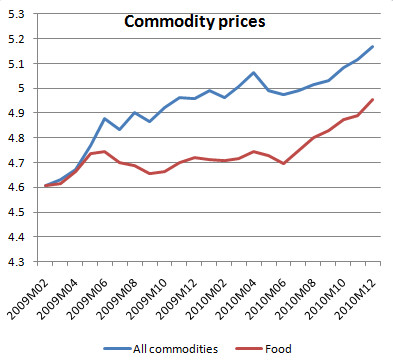
"....Overall commodity prices have been rising rapidly since world industrial production bottomed out. Food prices mostly didn’t follow until last summer — which is when the weather started going crazy in Russia and elsewhere."

- Sent using Google Toolbar"

5 de fevereiro de 2011

Qualificações sobre o tempo que passa

O artigo referenciado abaixo consiste numa crítica de um conjunto largo de livros publicados, recentemente, sobre a China.


"Napoleon famously described China as a sleeping giant that would shake the world when it finally awoke. Well, now the giant is up and about, and the rest of us can’t help but notice. 2010, indeed, could well end up being remembered as the year when China started throwing its weight around.

- Sent using Google Toolbar"

Subida dos preços de alimentação


"....Overall grain production is down — and it’s down substantially more when you take account of a growing world population. Wheat production (this time not per capita) is way down.

You might ask why a production shortfall of 5 percent leads to a doubling of prices. Part of the answer is that some kinds of demand are growing faster than population — in particular, China is becoming a growing importer of feed to meet the demand for meat. But the main point is that the demand for grain is highly price-inelastic: it takes big price rises to induce people to consume less, yet collectively that’s what they must do given the shortfall in production.

Why is production down? Most of the decline in world wheat production, and about half of the total decline in grain production, has taken place in the former Soviet Union — mainly Russia, Ukraine, and Kazakhstan. And we know what that’s about: an incredible, unprecedented heat wave. ....

- Sent using Google Toolbar"

A segurança alimentar tem vindo a ter um peso cada vez mais significativo nas agendas governamentais de alguns países europeus. No país, o assunto foi ventilado há poucos dias (ver aqui). A acuidade do problema irá aumentar nos próximos anos.

Nos Açores não tenho dúvida que o assunto está a merecer a consideração devida por parte do governo e do seu Presidente (como é bom de ver não é uma mera questão sectorial). Desta feita, a oposição não está a dormir e o assunto já foi referido por um deputado do PSD, da Terceira, António Ventura, já há algum tempo - não sei, contudo, se o que preconizava é o mais adequado, mas a sua preocupação era e é, cada vez mais, justificada.

Como cidadão, como habitante do arquipélago, e logo como parte interessada, no entanto, gostaria de saber como se pretende abordar cá o problema. Penso que seria útil ir falando, nomeadamente, desta questão, a nível público. Se a situação se tornar dramática, mais dramática poderá ser nos Açores, se não houver planos de contingência e uma opinião pública preparados com a devida antecedência.

A nota de Paul Krugman, mencionada acima, deve ser lida na totalidade.

4 de fevereiro de 2011

Verdades à La Palice


"At a time of seemingly proliferating risks, though, Porter’s searching book is a welcome reminder of the necessity of prudent decision making. “The truth is,” he writes, “we can’t afford it all.”

- Sent using Google Toolbar"

Isto não é uma verdade à La Palice?

É, em absoluto, mas outra verdade à La Palice é a seguinte: aquilo que é uma verdade à La Palice para uns, não é, definitivamente, uma verdade à La Palice para outros.

Não tenho uma posição definida sobre o assunto, mas estou de acordo que não é, nem de longe, uma questão importante ...


.... Há muita gente na sociedade portuguesa que defende esta ideia, no sentido da passagem do número actual de 230 para o mínimo constitucional de 180. Oponho-me a esta proposta e gostaria de explicar porquê. 

Os defensores da redução do número de deputados costumam avançar dois argumentos: o da poupança de dinheiros públicos e o da fraca qualidade da maioria dos nossos deputados, o que os torna dispensáveis. Ora, a poupança de algumas dezenas de salários de deputados seria absolutamente negligenciável no OE e praticamente não afectaria as restantes verbas de funcionamento da Assembleia da República. Mas o mais importante é que, com a redução do número de deputados, a consequência natural não seria a saída dos piores mas, bem pelo contrário, a saída dos melhores, daqueles que entram pelo seu mérito e não por fazerem parte dos aparelhos partidários. Ou seja, os defensores da redução do número de deputados fazem-no no pressuposto ingénuo de que isso levaria à melhoria da qualidade média dos deputados mas, na minha opinião, o resultado seria exactamente o contrário.

Há ainda um outro argumento de importância: o parlamento é o lugar onde está representado o país e é necessário que espelhe a sua diversidade regional, ideológica, opinativa, etc. ....

- Sent using Google Toolbar"

Anomalias


"New research shows that the 2010 Amazon drought may have been even more devastating to the region's rainforests than the unusual 2005 drought, which was previously billed as a one-in-100 year event.

- Sent using Google Toolbar"

3 de fevereiro de 2011

Astronomy Picture of the Day, 3 de Fevereiro de 2011 - planetas, e mais planetas, e já muito próximos do tamanho do nosso.

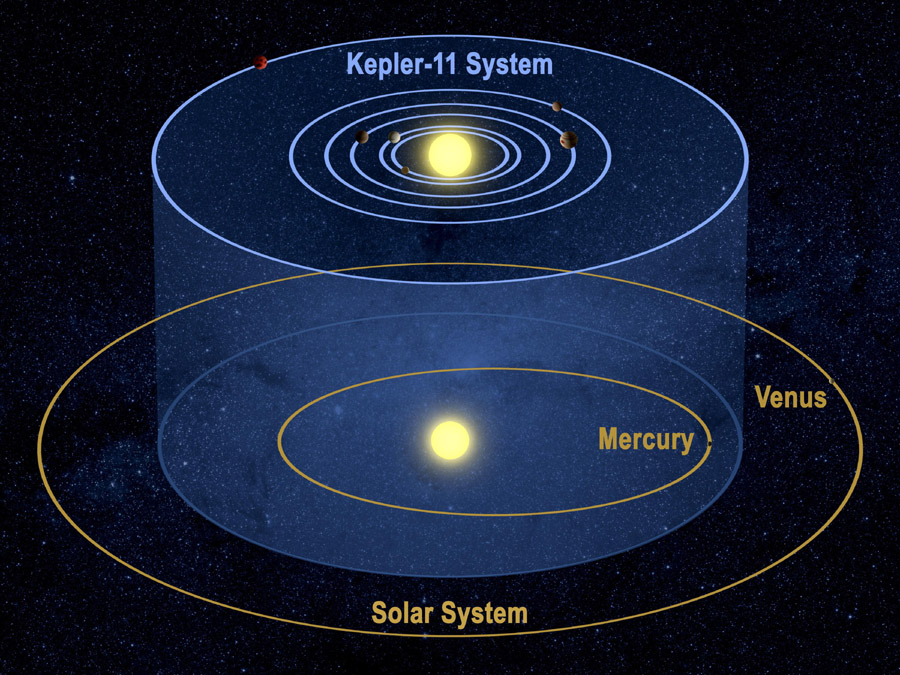
Six Worlds for Kepler-11
Illustration Credit: Tim Pyle, NASA

Explanation:  
Six worlds orbit Kepler-11, a sunlike star 2,000 light-years distant in the constellation Cygnus. The new discovery, based on data from NASA's planet hunting Kepler spacecraft, makes the Kepler-11 system the fullest exoplanetary system known. Compared to our Solar System in this illustration, five of Kepler-11's planets orbit closer to their parent star than the Mercury-Sun distance, with orbital periods ranging from 10 to 47 days. All six are larger than Earth and are likely composed of mixtures of rocky material and gas. Their presence, sizes, and masses have been determined by carefully watching the planets dim the light of Kepler-11 while transiting or crossing in front of the star itself. In fact, in August 2010, Kepler's telescope and camera recorded a simultaneous transit of three of the planets in the system. As announced yesterday, using the transit technique the Kepler mission has now identified over 1200 exoplanet candidates in a field of view that covers only about 1/400th of the sky. The tantalizing result suggests there are many undiscovered planets orbiting the stars in our galaxy.


2 de fevereiro de 2011

Anomalias


"Overview of conditions

Arctic sea ice extent averaged over January 2011 was 13.55 million square kilometers (5.23 million square miles). This was the lowest January ice extent recorded since satellite records began in 1979. It was 50,000 square kilometers (19,300 square miles) below the record low of 13.60 million square kilometers (5.25 million square miles), set in 2006, and 1.27 million square kilometers (490,000 square miles) below the 1979 to 2000 average.

Ice extent in January 2011 remained unusually low in Hudson Bay, Hudson Strait (between southern Baffin Island and Labrador), and Davis Strait (between Baffin Island and Greenland). Normally, these areas freeze over by late November, but this year Hudson Bay did not completely freeze over until mid-January. The Labrador Sea remains largely ice-free.

- Sent using Google Toolbar"

À luz do que se está a passar hoje no Cairo, Mubarak não necessita do conselho!


.... And so that brings me to a useful piece of advice for any readers who are aspiring dictators, one that the Communists knew, Suharto knew, but that some modern day tyrants seem to have forgotten. There is always a level of civil unrest that outstrips the capability of even the most loyal and largest regular armed forces to deal with. In all likelihood, as a medium sized emerging market, you will have a capital city with a population of about five or six million, meaning potentially as many as three million adults on the streets in the worst case. Your total active-duty armed forces are unlikely to be a tenth of that. When it becomes a numbers game, there is only one thing that can save you. 

And that is, a reactionary citizens' militia, to combat the revolutionary citizens' militia. Former socialist republics always used to be fond of buses full of coal miners from way out the back of beyond, but the Iranian basijis are the same sort of thing. Basically, what you need is a large population who are a few rungs up from the bottom of society, who aren't interested in freedom and who hate young people. In other words, arseholes. Arseholes, considered as a strategic entity, have the one useful characteristic that is the only useful characteristic in the context of an Egyptian-style popular uprising - there are f---ing millions of them.
....
- Sent using Google Toolbar"

E isso é mais verdade em algumas jurisdições do que noutras ...


"... the real point here is to remember, always, that economic statistics are a peculiarly boring sub-genre of science fiction; extremely useful, but not to be treated as absolute truth.

- Sent using Google Toolbar"

Estou, obviamente, a correr o risco disto ser embandeirado pelos do costume, donde à cautela, lembrar que há boa e má ficção científica, e que a má estatística económica, não só não é útil como é perniciosa porque de verdadeira é que não tem nada (vide, por exemplo,as criativas contas económicas gregas pré-crise)-a outra, pelo menos, tenta aproximar-se da realidade e não pretende enganar. A leitura da nota dá uma ideia do tipo de trabalho que se tem, habitualmente, com estatísticas económicas.

Não que a especulação não possa estar a dar o seu contributo, mas ....


"...the question remains, why did food prices run up this time? Here again, there just doesn’t seem to be much dispute about the major contributing factors, starting with extreme weather. Last month, Scientific American reported, “world food prices hit a record high in December thanks to crop failures from a series of extreme weather events around the world:

FAO attributes the upswing in prices to factors including the crop failures caused by a string of extreme weather events and high crop demands from an ever-increased global population….

Wheat, for example, bludgeoned by Russia’s wildfires, the heat waves in Australia and flooding in Pakistan, saw massive price surges last fall.

- Sent using Google Toolbar"

Isto é óbvio, mas é óbvio desde sempre


This is a perilous time for Israel, and its anxiety is understandable. But I fear Israel could make its situation even more perilous if it succumbs to the argument one hears from a number of senior Israeli officials today that the events in Egypt prove that Israel can’t make a lasting peace with the Palestinians. It’s wrong and dangerous.
....
I had given up on Netanyahu’s cabinet and urged the U.S. to walk away. But that was B.E. — Before Egypt. Today, I believe President Obama should put his own peace plan on the table, bridging the Israeli and Palestinian positions, and demand that the two sides negotiate on it without any preconditions. It is vital for Israel’s future — at a time when there is already a global campaign to delegitimize the Jewish state — that it disentangle itself from the Arabs’ story as much as possible. There is a huge storm coming, Israel. Get out of the way.

- Sent using Google Toolbar"

O livro a ler sobre o Próximo e Médio Oriente é: "The Great War for Civilisation, The Conquest of The Middle East", Robert Fisk (existe tradução em português). O artigo acima deve ser lido na totalidade.

1 de fevereiro de 2011

O poder das potências de 10


"Powers of Ten
Credit & Copyright: Charles & Ray Eames (Eames Office)

Explanation: How different does the universe look on small, medium, and large scales? The most famous short science film of its generation gives breathtaking comparisons. That film, Powers of Ten, originally created in the 1960s, has now been officially posted to YouTube and embedded above. Please click the above arrow to see the nine minute movie for yourself. From a picnic blanket near Chicago out past the Virgo Cluster of Galaxies, every ten seconds the film zooms out to show a square a factor of ten times larger on each side. The video then reverses, zooming back in a factor of ten every two seconds and ends up inside a single proton. The Powers of Ten sequence is actually based on the book Cosmic View by Kees Boeke in 1957, as is a similar but mostly animated film Cosmic Zoom that was also created in the late 1960s. The changing perspectives are so enthralling and educational that sections have been recreated using more modern computerized techniques, including the first few minutes of the movie Contact, and in a short digital video called The Known Universe created last year for the American Museum of Natural History. Ray and husband Charles Eames, the film's creators, were known as quite visionary spirits and even invented their own popular chair.

- Sent using Google Toolbar"